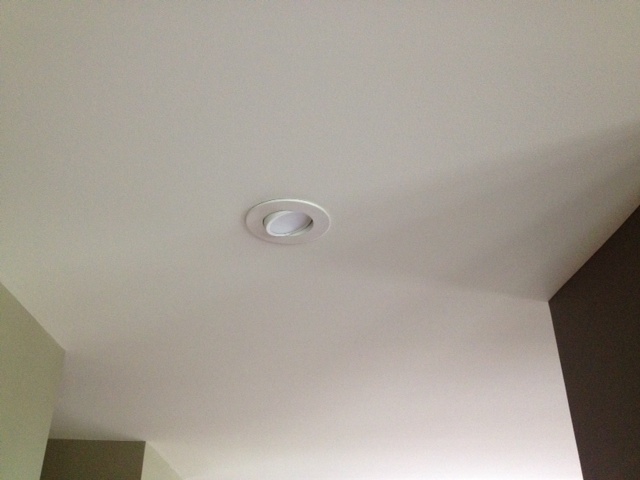
We have utilized mini split heat pump HVAC systems in a number of our projects over the past several years. Most of these have been Mitsubishi systems and have been installed by our excellent trade partner Royal River Heat Pumps in Freeport ME.
Customer feedback indicates that these systems are extremely quiet, cost efficient to operate, and provide reliable heating throughout our cold Maine winter weather.
Of course they also provide warm weather air conditioning which more and more of our clients have been including in their "must have" list when designing their new homes.
The cost of these systems is much less than adding air conditioning to an LP or Fuel oil heated home project, and the efficiency is far better (cost to operate is much lower).
These systems are available as ducted systems with no exposed equipment, wall hung units, and floor units all of which have been utilized in our projects.
Mini spit heat pump HVAC should be a consideration for your new home project.
Friday, February 2, 2018
Friday, August 11, 2017
Boral Siding and Trim
We have recently completed a project where Boral siding and trim products were utilized.
Boral is manufactured with 70% recycled materials, is extremely moisture resistant, and is dimensionally stable during temperature and humidity changes (unlike wood and other non wood siding and trim products).
It looks great installed and is indistinguishable from wood siding and trim once painted.
We are looking forward to using this sustainable product again soon on future projects.
Boral is manufactured with 70% recycled materials, is extremely moisture resistant, and is dimensionally stable during temperature and humidity changes (unlike wood and other non wood siding and trim products).
It looks great installed and is indistinguishable from wood siding and trim once painted.
We are looking forward to using this sustainable product again soon on future projects.
Monday, February 13, 2017
Blower Door Testing up-date #3
I have previously made blog entries regarding blower door shell testing on new home construction to locate and address air leaks within the building envelope of conditioned space. These tests are conducted by an independent energy auditor once a new home is tight to weather and (typically) after it has been insulated.
Recently we conducted such a test on a new project which was constructed and insulated similarly to other projects that we have tested.
The test resulted in 0.85 ACH/50. Pretty good numbers!
Other similar homes tested somewhat higher and as I think about differences between these projects the one item that I can identify that could be the reason for an improvement is that on this recent test every window in the house is either a casement window or a fixed window where as the other homes we have tested had a mix of casement, awning, and double hung windows (the window manufacturer (Andersen) and model (A-Series) were the same in all of our test homes).
Some of our homeowner clients have voiced their preference for not having any casement windows in their new homes but for those that are not opposed the casement window style does have an energy performance advantage when a house is under negative pressure (windy weather).
Recently we conducted such a test on a new project which was constructed and insulated similarly to other projects that we have tested.
The test resulted in 0.85 ACH/50. Pretty good numbers!
Other similar homes tested somewhat higher and as I think about differences between these projects the one item that I can identify that could be the reason for an improvement is that on this recent test every window in the house is either a casement window or a fixed window where as the other homes we have tested had a mix of casement, awning, and double hung windows (the window manufacturer (Andersen) and model (A-Series) were the same in all of our test homes).
Some of our homeowner clients have voiced their preference for not having any casement windows in their new homes but for those that are not opposed the casement window style does have an energy performance advantage when a house is under negative pressure (windy weather).
Sunday, May 31, 2015
LED lighting and new home construction
LED lighting is helping to make our new home building projects more energy efficient than ever before. As LED lighting options have become more abundant and affordable it is being utilized almost exclusively throughout our new home building projects in a variety of applications.
Whether selecting LED bulbs for lighting fixtures, LED bulb/trim inserts for recessed lighting, or LED "ribbon" accent lighting for under cabinet and display applications, whole house LED lighting can make a significant impact on energy costs.
In my own all LED house, one string of incandescent Christmas tree lights consumed more electricity that the remainder of the house lighting combined (we will have LED Christmas lights this year)!
Whether selecting LED bulbs for lighting fixtures, LED bulb/trim inserts for recessed lighting, or LED "ribbon" accent lighting for under cabinet and display applications, whole house LED lighting can make a significant impact on energy costs.
In my own all LED house, one string of incandescent Christmas tree lights consumed more electricity that the remainder of the house lighting combined (we will have LED Christmas lights this year)!
Tuesday, December 9, 2014
As seen in "Maine Home + Design" magazine
One of our recent projects has been featured in the Architecture issue of "Maine Home + Design Magazine".
Please follow the following link to review the article: Maine Home + Design article
ARCHITECTURE: BY DESIGN
Construction: Greg Fitzpatrick, Custom Home Builder
Structural Engineering: Becker Structural Engineers
Landscape Architecture: Terrence J. DeWan & Associates
Photography: Randolph Ashey
Please follow the following link to review the article: Maine Home + Design article
ARCHITECTURE: BY DESIGN
Construction: Greg Fitzpatrick, Custom Home Builder
Structural Engineering: Becker Structural Engineers
Landscape Architecture: Terrence J. DeWan & Associates
Photography: Randolph Ashey
Wednesday, October 23, 2013
A cure for thermal bridging
We have utilized a number of strategies to combat thermal bridging, the heat loss/transfer that occurs through the connection between conditioned and un-conditioned space by framing lumber.
A relatively new product that we have recently utilized is the ZIP R-Sheathing from Huber Wood the maker of Advantech floor/wall/roof sheathing.
ZIP R-Sheathing combines the popular ZIP System sheathing and continuous foam insulation available in 1" which includes 1/2" R-3.3 foam, and 1-1/2" which includes 1" R-6.6 foam.
Some advantages of the ZIP R-Sheathing is a one step installation of wall sheathing and foam envelope insulation, tight to weather walls as soon as the proprietary "ZIP" tape has been installed on the seams, and a reasonable balance of cost to build and energy efficiency.
We will definitely use the ZIP R-Sheathing again on upcoming projects and recommend it as a consideration for your future new home construction project.
A relatively new product that we have recently utilized is the ZIP R-Sheathing from Huber Wood the maker of Advantech floor/wall/roof sheathing.
ZIP R-Sheathing combines the popular ZIP System sheathing and continuous foam insulation available in 1" which includes 1/2" R-3.3 foam, and 1-1/2" which includes 1" R-6.6 foam.
Some advantages of the ZIP R-Sheathing is a one step installation of wall sheathing and foam envelope insulation, tight to weather walls as soon as the proprietary "ZIP" tape has been installed on the seams, and a reasonable balance of cost to build and energy efficiency.
We will definitely use the ZIP R-Sheathing again on upcoming projects and recommend it as a consideration for your future new home construction project.
Another new product that we have recently utilized for the fist time is "ZIP system Liquid Flash". Liquid flash as the name implies is a liquid flashing material for sealing sheathing seams and preparing window and door openings. It is applied with a caulk gun and plastic spreader. The applied product is very tough and durable and looks to be an improvement to some previously widely used weather management techniques. Wear rubber gloves when applying liquid flash!
Saturday, February 16, 2013
Blower Door Test Update #2
A second blower door test was recently conducted on our current new home construction project. This test was done after the completion of insulation installation to ensure that we had sealed the shell adequately.
Our initial test result was 1.89 ACH/50 prior to air sealing and insulation completion. The second test result was 1.62ACH/50.
My first reaction was of disappointment having utilized hundreds of dollars of spray foam and a bit of my time sealing every inside sheathing seam, panel edge and penetration. This was in addition to the insulation contractors efforts which were substantial.
A smoke generator utilized during the test showed that the weak links in the air tightness of this structure are the double hung windows, doors, and zero clearance fireplace flue and combustion air supply.
There is nothing that can be done about the windows (other than utilizing much more expensive euro windows and avoiding double hung windows (we have utilized Marvin windows which are very good windows). The doors should get better with the permanent hardware and corner pads installed which will be done after we paint. There is nothing that can be done to further seal the fireplace.
A final blower test will be done after drywall installation and the permanent door hardware and corner pads have been installed.
My expectations are for some additional but modest improvement on the final test result and as I think about things I have made the following conclusions:

Our initial test result was 1.89 ACH/50 prior to air sealing and insulation completion. The second test result was 1.62ACH/50.
My first reaction was of disappointment having utilized hundreds of dollars of spray foam and a bit of my time sealing every inside sheathing seam, panel edge and penetration. This was in addition to the insulation contractors efforts which were substantial.
A smoke generator utilized during the test showed that the weak links in the air tightness of this structure are the double hung windows, doors, and zero clearance fireplace flue and combustion air supply.
There is nothing that can be done about the windows (other than utilizing much more expensive euro windows and avoiding double hung windows (we have utilized Marvin windows which are very good windows). The doors should get better with the permanent hardware and corner pads installed which will be done after we paint. There is nothing that can be done to further seal the fireplace.
A final blower test will be done after drywall installation and the permanent door hardware and corner pads have been installed.
My expectations are for some additional but modest improvement on the final test result and as I think about things I have made the following conclusions:
- The ZIP sheathing with ZIP taped seams do a pretty good job at sealing the shell and probably do not require further air sealing on the interior side
- The 1" DOW foam that is applied to the exterior with seams taped helps air tightness as well
- The Protecto Triple Guard sill seal is more effective than traditional sill seal products to seal the foundation wall/sill plate joint
- The cost to upgrade windows and decision to forgo the fireplace in an attempt to achieve a test result of less than 1.0ACH/50 is probably something that many homeowners are not willing to do given the significant added cost of the windows and lifestyle choice of having a fireplace
- Our test result of 1.62ACH/50 (and maybe a bit better after our upcoming final test) represents a very well air sealed home which will be very efficient to heat for its occupants.
Subscribe to:
Posts (Atom)