Monday, April 8, 2019

LP Smartside siding

We will be utilizing LP Smartside siding products on an up-coming project and are looking forward to comparing for ourselves how this highly rated product stacks up to the Hardi fiber cement siding products that we have installed on so many projects over the years.
We will be installing a mix of clapboard siding as well as board and baton siding on this project. The clapboard siding is available in wood grain and smooth textures and can be ordered pre-finished which we will do. The board and baton will be accomplished by installing 4'x8' LP panels and attaching batons on a 16"oc layout which will cover the panel seams.
These products are highly sustainable and have a great warranty, two things that we are always looking for when selecting building products.
I will report back as the install takes place with further thoughts as we are working with the actual products.


Friday, February 2, 2018

Mini Split Heat Pump HVAC

We have utilized mini split heat pump HVAC systems in a number of our projects over the past several years. Most of these have been Mitsubishi systems and have been installed by our excellent trade partner Royal River Heat Pumps in Freeport ME.


Customer feedback indicates that these systems are extremely quiet, cost efficient to operate, and provide reliable heating throughout our cold Maine winter weather.
Of course they also provide warm weather air conditioning which more and more of our clients have been including in their "must have" list when designing their new homes.
The cost of these systems is much less than adding air conditioning to an LP or Fuel oil heated home project, and the efficiency is far better (cost to operate is much lower).

These systems are available as ducted systems with no exposed equipment, wall hung units, and floor units all of which have been utilized in our projects.


Mini spit heat pump HVAC should be a consideration for your new home project.


Friday, August 11, 2017

Boral Siding and Trim

We have recently completed a project where Boral siding and trim products were utilized.
Boral is manufactured with 70% recycled materials, is extremely moisture resistant, and is dimensionally stable during temperature and humidity changes (unlike wood and other non wood siding and trim products).
It looks great installed and is indistinguishable from wood siding and trim once painted.
We are looking forward to using this sustainable product again soon on future projects.


Monday, February 13, 2017

Blower Door Testing up-date #3

I have previously made blog entries regarding blower door shell testing on new home construction to locate and address air leaks within the building envelope of conditioned space. These tests are conducted by an independent energy auditor once a new home is tight to weather and (typically) after it has been insulated.
Recently we conducted such a test on a new project which was constructed and insulated similarly to other projects that we have tested.
The test resulted in 0.85 ACH/50. Pretty good numbers!
Other similar homes tested somewhat higher and as I think about differences between these projects the one item that I can identify that could be the reason for an improvement is that on this recent test every window in the house is either a casement window or a fixed window where as the other homes we have tested had a mix of casement, awning, and double hung windows (the window manufacturer (Andersen) and model (A-Series) were the same in all of our test homes).
Some of our homeowner clients have voiced their preference for not having any casement windows in their new homes but for those that are not opposed the casement window style does have an energy performance advantage when a house is under negative pressure (windy weather).

Sunday, May 31, 2015

LED lighting and new home construction

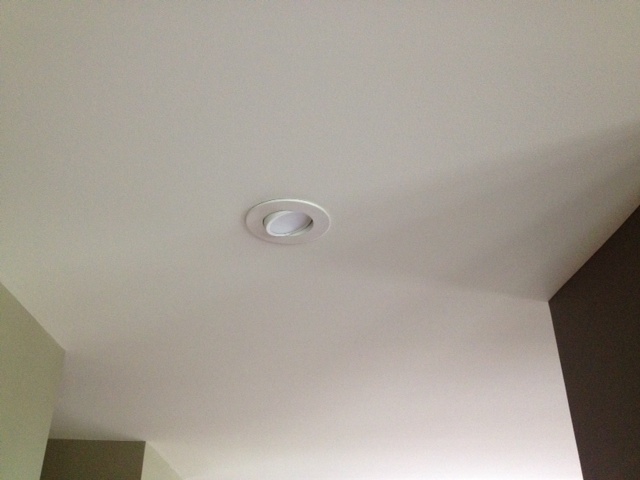
LED lighting is helping to make our new home building projects more energy efficient than ever before. As LED lighting options have become more abundant and affordable it is being utilized almost exclusively throughout our new home building projects in a variety of applications.
Whether selecting LED bulbs for lighting fixtures, LED bulb/trim inserts for recessed lighting, or LED "ribbon" accent lighting for under cabinet and display applications, whole house LED lighting can make a significant impact on energy costs.
In my own all LED house, one string of incandescent Christmas tree lights consumed more electricity that the remainder of the house lighting combined (we will have LED Christmas lights this year)!


Tuesday, December 9, 2014

As seen in "Maine Home + Design" magazine

One of our recent projects has been featured in the Architecture issue of "Maine Home + Design Magazine".

Please follow the following link to review the article: Maine Home + Design article


ARCHITECTURE: BY DESIGN
Construction: Greg Fitzpatrick, Custom Home Builder
Structural Engineering: Becker Structural Engineers
Landscape Architecture: Terrence J. DeWan & Associates
Photography: Randolph Ashey 

Wednesday, October 23, 2013

A cure for thermal bridging

We have utilized a number of strategies to combat thermal bridging, the heat loss/transfer that occurs through the connection between conditioned and un-conditioned space by framing lumber.
A relatively new product that we have recently utilized is the ZIP R-Sheathing from Huber Wood the maker of Advantech floor/wall/roof sheathing.
ZIP R-Sheathing combines the popular ZIP System sheathing and continuous foam insulation available in 1" which includes 1/2" R-3.3 foam, and 1-1/2" which includes 1" R-6.6 foam.
Some advantages of the ZIP R-Sheathing is a one step installation of wall sheathing and foam envelope insulation, tight to weather walls as soon as the proprietary "ZIP" tape has been installed on the seams, and a reasonable balance of cost to build and energy efficiency.
We will definitely use the ZIP R-Sheathing again on upcoming projects and recommend it as a consideration for your future new home construction project.


Another new product that we have recently utilized for the fist time is "ZIP system Liquid Flash". Liquid flash as the name implies is a liquid flashing material for sealing sheathing seams and preparing window and door openings. It is applied with a caulk gun and plastic spreader. The applied product is very tough and durable and looks to be an improvement to some previously widely used weather management techniques. Wear rubber gloves when applying liquid flash!


Saturday, February 16, 2013

Blower Door Test Update #2

A second blower door test was recently conducted on our current new home construction project. This test was done after the completion of insulation installation to ensure that we had sealed the shell adequately.

Our initial test result was 1.89 ACH/50 prior to air sealing and insulation completion. The second test result was 1.62ACH/50.

My first reaction was of disappointment having utilized hundreds of dollars of spray foam and a bit of my time sealing every inside sheathing seam, panel edge and penetration. This was in addition to the insulation contractors efforts which were substantial.

A smoke generator utilized during the test showed that the weak links in the air tightness of this structure are the double hung windows, doors, and zero clearance fireplace flue and combustion air supply.
There is nothing that can be done about the windows (other than utilizing much more expensive euro windows and avoiding double hung windows (we have utilized Marvin windows which are very good windows). The doors should get better with the permanent hardware and corner pads installed which will be done after we paint. There is nothing that can be done to further seal the fireplace.

A final blower test will be done after drywall installation and the permanent door hardware and corner pads have been installed.

My expectations are for some additional but modest improvement on the final test result and as I think about things I have made the following conclusions:

  • The ZIP sheathing with ZIP taped seams do a pretty good job at sealing the shell and probably do not require further air sealing on the interior side
  • The 1" DOW foam that is applied to the exterior with seams taped helps air tightness as well
  • The Protecto Triple Guard sill seal is more effective than traditional sill seal products to seal the foundation wall/sill plate joint
  • The cost to upgrade windows and decision to forgo the fireplace in an attempt to achieve a test result of less than 1.0ACH/50 is probably something that many homeowners are not willing to do given the significant added cost of the windows and lifestyle choice of having a fireplace 
  • Our test result of 1.62ACH/50 (and maybe a bit better after our upcoming final test) represents a very well air sealed home which will be very efficient to heat for its occupants.


Thursday, January 24, 2013

Update on Blower Door Testing

I had previously written about Blower Door Testing to measure how well a completed home is air sealed (which is now a requirement in some of the communities that we build new homes in as a condition to receiving a certificate of occupancy).
Recently, we performed a blower door test on a new house that we are building as soon as the house was tight to weather (but prior to the insulation being installed) to help us determine how we could better air seal the building shell while it is still accessible.
This particular home includes the popular "ZIP" wall and roof sheathing and has all seams properly taped. It also has 1" DOW Tuff -R polyiso foam board applied to the outside of the sheathing with all seams taped as well.
The windows and door perimeters were foam sealed, but no other wall sealing efforts had been completed prior to the testing.


Our test results were 1.89 ACH at 50 Pascals. Not too bad, but, we have a pretty strict final target established of 1.0 ACH/50 that we would like to achieve.
The test results have determined the need to air seal 38 square inches of leakage to achieve our target goals.
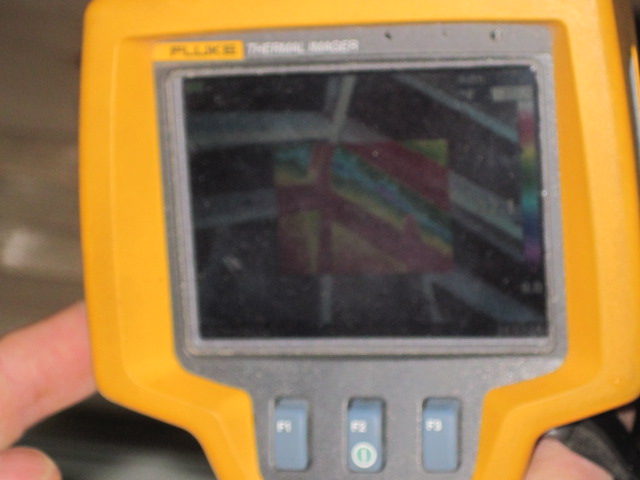
As the test was being conducted we utilized an inferred camera to identify temperature changes in the building shell which could be caused by air movement. When we found these areas, we used a smoke generating device to check if it was indeed air movement causing the differential, and if so, made a paint mark to identify the need to air seal that area.
We will conduct another blower door test after completing air sealing and insulation installation to see how we did.
So far we have sealed all identified areas as indicated by our test, and went ahead and sealed the inside sheathing seams, top and bottom plates, gable rafters, and around window and door headers and studs which had not indicate leakage, but are areas that we would typically seal anyway.

I will follow up with the results of the next blower door test after it has been completed.



Monday, June 18, 2012

Make up air in tight house construction

New home builders in Maine have often included dedicated make up air supply for fireplace and wood stove locations, but as houses get tighter and tighter in an effort to conserve energy, make up air for other devices that exhaust air from the building envelope such as kitchen exhaust fans should be considered.

Unfortunately however, the manufacturers of these items are not typically prepared with recommendations and provisions to help homeowners and contractors determine what is best to do.
An excellent article on this subject:  Make up air for range hoods  can be read here.

Solutions to consider are to either select low CFM devices, re-circulating devices, or provide make up air to avoid the pitfalls of high CFM air exhaust and a tight building envelope.

Depending on total square footage, even houses with whole house air exchange systems may require additional make up air if the CFM volume of air exhausted exceeds the exchange system capacity.

Of course you could always open a window a little bit as many people have done for years to avoid back drafting stoves and fireplaces, but with a little thought and advanced planning that can hopefully be avoided.


Sunday, March 18, 2012

Blower Door Testing

As Maine home builders strive to enhance energy efficiency in new home construction, blower door testing is being utilized as a valuable tool to measure how effective we are at air sealing to eliminate unconditioned air from entering the building envelope

A simple concept: with all windows, doors, and other pathways for outside air to enter closed, the blower door temporarily seals itself into an exterior door opening, blows air out of the house at a controlled rate, and measures how much (or how little) replacement air is entering the house


Often, a test may be conducted before the installation of insulation so that air leaks can be identified and corrected while there is access to areas that will be inaccessible after insulation has been installed

An additional test may be conducted after insulation and drywall have been installed to measure the final results

Some municipalities in Maine are now requiring blower door testing as a condition to receive a certificate of occupancy

While test results can vary widely depending upon the goals and construction details of the project, blower door testing can benefit all new home construction in Maine

Saturday, December 10, 2011

Geo-Thermal heating in Maine

We are currently working on a project that is utilizing a ground sourced Geo-Thermal Heat Pump HVAC system.
I am a big fan of these systems as they are unmatched for efficiency of operation. Geo systems are about 400% efficient as compared to the best LP systems which are about 95% efficient. In other words, for every dollar of energy purchased to operate the system (electricity for a Geo system) a Geo-Thermal system delivers four dollars worth of heat (the LP system delivers .95 cents worth of heat for every dollar of LP purchased)!


This system was designed and installed by Elco Geo-Thermal Heating of Bangor ME.
It is an "Open Loop" system which utilizes the existing domestic supply well for its heat exchange source. Simply, water from the well is pumped to the heat pump, heat is extracted from the water, and then it is returned to the well.


The system delivers heat and air-conditioning via a ducted forced air delivery.
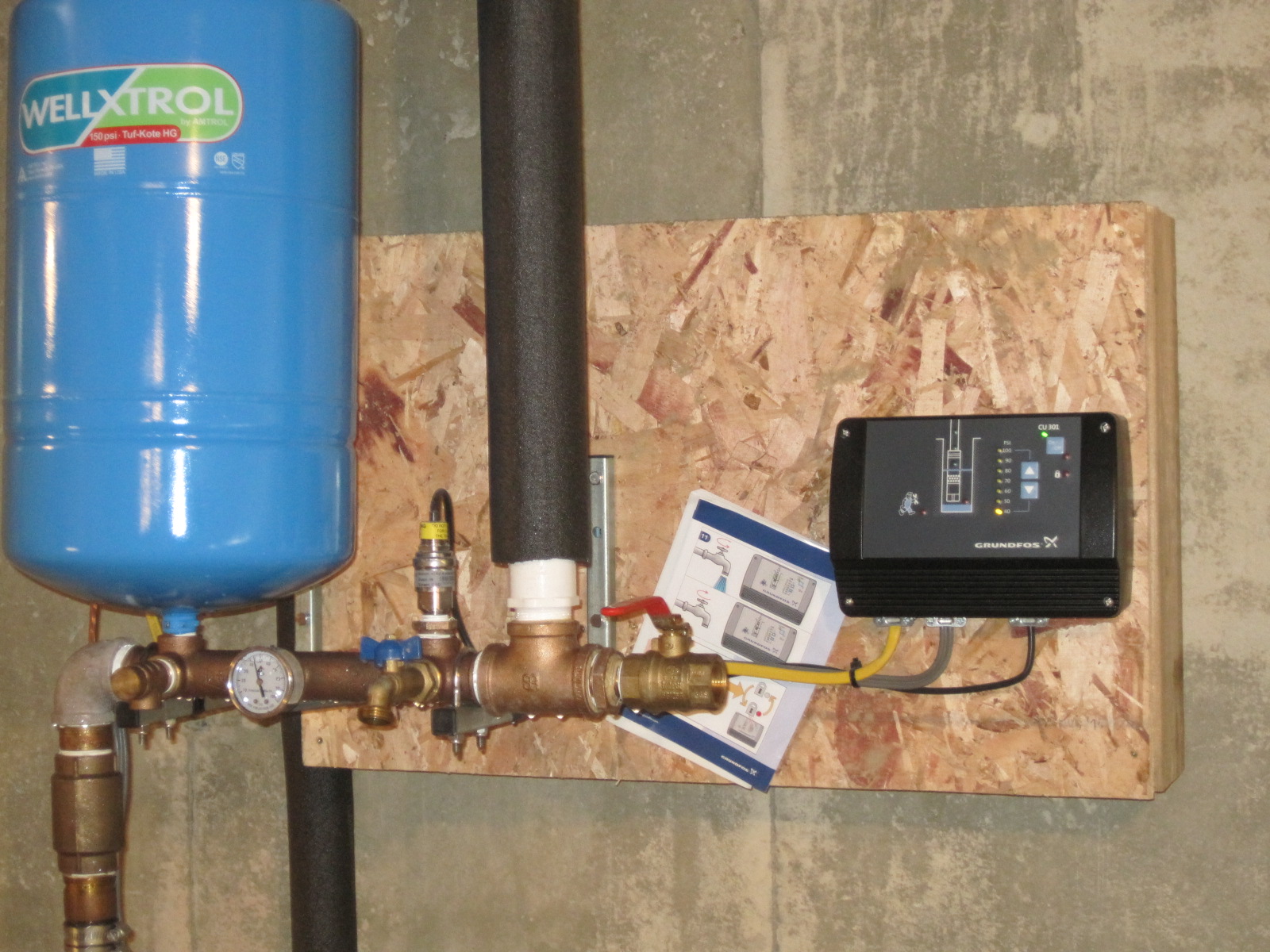
As an added benefit, whenever the system is operating it also pre-heats domestic supply water as a free by-product which is then held in a storage tank until required which further reduces energy costs.

We have also added a Heat Recovery Ventilation (HRV) system which works in concert with the HVAC system to provide a continuous fresh air exchange into the building envelope while capturing much of the heat from the exhaust air being removed from the house.


These systems do cost more than typical Oil or LP boiler/furnace systems, however they currently enjoy a 30% Federal Tax Credit (through 2016) which makes the installed price very competitive and the return on investment time relatively short.

I am a big fan of these systems and we are specifying them in several upcoming projects, including our own home!

Monday, August 15, 2011

Energy efficient construction

No matter what house style, no matter what budget, energy efficient building techniques should be utilized to enhance ongoing home energy performance.
The following photographs of a current project in New Gloucester Maine highlight a few details that will have a dramatic positive effect regarding how comfortable this house will be, as well as less expensive to heat.

Intersecting wall framing techniques that allow full insulation to be installed in the outside wall cavity which eliminates an area of potential thermal transfer from conditioned to unconditioned space


Insulated window and door header assemblies with continuous rigid foam insulation


Wall corner construction that allows our blown in insulation to fully insulate this often neglected area


Even though we utilize foam sill seal gasket between the sill plate and foundation wall,
we also caulk this seam with silicon caulk


We will foam seal all sheathing panel edges as well as both sides of any wall stud where two panels meet and at the top and bottom plate

It only takes advanced planning, a little extra time and a few cans of DOW Pro foam to make a big difference.

Tuesday, May 24, 2011

Build new houses tight, tight, tight!

I sometimes hear people say things like "new houses today are being built too tight".

I might share this opinion if I were a home heating fuel salesman, but as a Maine home builder with a focus on saving my customers money through energy efficient construction, I say that it is better to understand building science, specifically moisture management, and build new homes as tight as you are able.

Years ago, fuel costs were low, and moisture management not well understood. Houses that leaked air were not much of a concern. They would get wet, but with an abundance of air moving through the walls would dry avoiding moisture damaged assemblies.

With rising fuel costs houses had to become better insulated and tighter, and fortunately within the past decade or so, building science case studies have shown new home builders the way to build structures that are not only tight, but also properly manage bulk moisture from external sources and moisture vapor from internal sources.

Today's home builders are fortunate to have the availability of a wide variety of excellent building products as well as the educational resources to build new homes that are both energy efficient and sustainable.

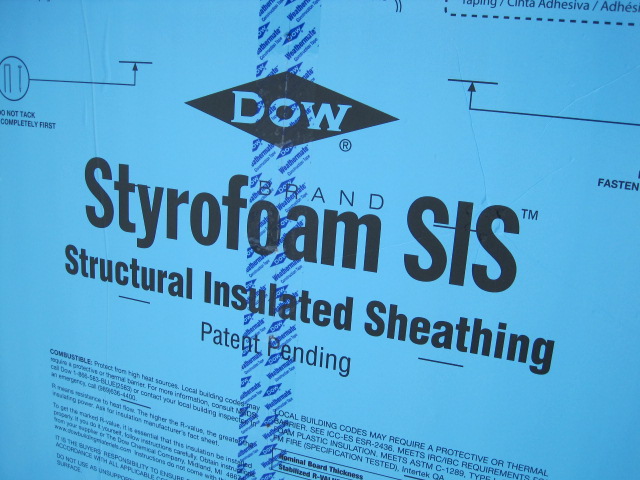
Products such as "Greenguard Raindrop house wrap" which facilitates a drainage plane between exterior cladding and wall sheathing, "Advantech" brand roof and wall sheathing which is highly resistant to moisture damage, "DOW" "SIS Structural Insulated Sheathing", "Styrofoam" extruded insulation panels, and "Thermax" insulation panels, "DOW" "Weathermate" construction tape and "DOW" "Great Stuff Pro" expanding foam insulation just to name a few.


New home builders that combine tight construction methods with advanced insulation materials and follow proper moisture management techniques will have happy customers enjoying comfortable, sustainable homes with reduced utility costs.

Wednesday, April 13, 2011

Fiber-Cement Siding: Worth considering for your new home

If you are interested in a durable, low maintenance, clean finished look for your new home construction project, Fiber-Cement siding is an excellent choice to consider.

Available in horizontal lap, vertical panel, shakes, and trim, it is a green product known for durability and beauty.

A wide variety of factory applied finish colors are available which will remain beautiful long beyond that of a typical site applied finish product.


We have utilized CertainTeed "WEATHERBOARDS" horizontal lap siding on a recent project and have specified it again for several upcoming projects as well. In addition to all of the previously stated benefits, "Weatherboards" has an industry leading realistic wood grain appearance as well.


Proper installation techniques are critical when utilizing fiber-cement siding. A drainage plane should be incorporated into the wall system to assure that moisture can not be absorbed into the back side of the siding, and industry best practice techniques should be followed for flashing, sealing, and bulk moisture management.

As an added benefit, Fiber-Cement costs compare favorably to other available siding choices.

I look forward to exploring with you how Fiber-Cement siding could be a good consideration for your new home project.

Tuesday, March 22, 2011

Energy Efficient Wall Construction

There are many choices to consider when designing wall assemblies that will be energy efficient and provide homeowners with a comfortable home that is economical to heat.

But which is the best balance of performance and cost to build?

We have been utilizing a method that combines advanced framing techniques, insulated sheathing, diligent wall sealing, and high performance blown in insulation to achieve these goals, and are happy to see that in a Building Science comparison of high R-value wall assemblies, this method scored quite favorably.


The Building Science study can be viewed here:
Building Science.com/high-r-value-wall-assemblies


Additional details and construction photographs can be viewed here:
The wall system, balancing efficiency and cost.


We look forward to exploring with you how these construction methods could be the best choice for your new home construction project.


Sunday, February 13, 2011

Radon resistant construction

A requirement of the new Maine Uniform Building and Energy Code (MUBEC) is Radon resistant construction techniques.


Radon, a soil gas that is prevalent throughout Maine has been linked to lung cancer.


We have previously partnered with the EPA to incorporate Radon resistant construction techniques in all new construction and believe that including it in the new building code was the right thing to do.


Many of the techniques were already included in our standard specifications, so it was fairly simple and inexpensive to comply with the remaining requirements and made sense to do so even before it became required by code.


An overview of the techniques follows:


  • Utilize perforated pipe for drainage/venting below basement concrete floor


  • Back fill below basement concrete floor with clean gravel or crushed stone


  • Utilize a poly vapor barrier above the gravel/stone and beneath basement concrete floor sealing the edges and penetrations with silicon caulk. Seal any foundation penetrations or cracks with silicon caulk


  • Connect a PVC vent pipe to the below slab drain/vent piping and run vertically within the building enclosure and through the roof deck to vent soil gasses


  • Add an electric outlet location in the attic space for a future vent fan if ever required


Together with appropriate building enclosure ventilation practices, these construction techniques will help assure homeowners of a healthy home living environment.

Thursday, January 13, 2011

New Energy Codes in Maine

In an effort to achieve conformity throughout the state, Maine has adopted the "Maine Uniform Building and Energy Code".


These new codes are now in effect in many cities and towns, and will be enacted statewide by July 1, 2012.


We welcome these new codes. We have always had a strong focus on energy efficiency and have typically exceeded code in an effort to achieve tight, well insulated houses that are easy to heat.


Some of the required changes however will add cost to a building project. As an example, foundation walls will now require continuous R-15 insulation, and concrete floors will require R-1o.


There are minimum U-Factor requirements for windows and skylights as well.


The following summary details the requirements by building enclosure element for Maine zone 6 ( all of Maine is zone 6 except Aroostook county which is zone 7).


Fenestration U-Factor: 0.35


Skylight U-Factor: 0.60


Ceiling R-Value: 49


Wood Frame Wall R-Value: 20 or 13+5(R-13 cavity insulation plus R-5 insulated sheathing)


Mass Wall R-Value: 15/19 (the second R-Value applies when more than half of the insulation is on the interior of the mass wall)


Floor R-Value: 30


Basement Wall R-Value: 15/19(R-15 continuous insulation on the interior or exterior, or R-19 cavity insulation on the interior)


Slab R-Value and Depth: 10, 4ft


Crawl Space Wall R-Value: 10/13


There are a number of strategies to achieve these new requirements. If you have questions about how these changes might effect your future project and which solutions will best balance performance and cost please contact me as I look forward to speaking with you further.

Wednesday, December 22, 2010

"Advanced Building Materials"

As advancements are made in building material development, quality home builders must continue to remain educated regarding construction methods and techniques that work in synergy with these advanced materials to eliminate potential future problems.
An excellent article by Building Science Corporation explores this topic in detail and can be found at the following link:http://www.buildingscience.com/documents/insights/bsi-039-five-things?topic=doctypes/insights

"Winkumpaugh Cottage"